
The modern distillery project is becoming harder to categorise. What may begin as a production requirement can quickly involve visitor experience, heritage, complex process interfaces, energy strategy, constrained infrastructure and a brand expectation that extends well beyond the functional building.
For clients, that changes the nature of project risk.
A distillery is still an industrial asset. It must produce safely, efficiently and reliably. But many developments now have to do significantly more. They may need to welcome visitors, communicate provenance, respond to ambitious sustainability targets and sit sensitively within rural, coastal or historic environments. At the same time, construction costs, specialist supply chains and programme pressures remain firmly commercial realities.
The challenge is not simply delivering a bigger or more technically advanced facility. It is managing several different project priorities without allowing one to undermine another.
Production remains the commercial core
The strongest distillery projects start with a clear understanding of what the asset is fundamentally there to achieve.
Production requirements influence almost every major decision. Process layouts, equipment interfaces, utilities, storage, access, maintenance and future expansion all shape the building and infrastructure around them. Where these requirements are not sufficiently developed at the right stage, uncertainty travels into design, procurement and construction.
That uncertainty has a cost.
Late changes to accommodate process equipment can affect structure, drainage, services and fire strategy. A revised production flow may alter access or logistics. Delayed equipment information can hold up design packages or create assumptions that contractors later qualify in their pricing.
This is why early project definition matters. Cost certainty cannot be separated from scope certainty, and on a distillery project the scope is often influenced by a combination of client operations, specialist process designers, equipment suppliers and the wider consultant team.
The role of project governance is to bring those inputs together early enough for decisions to remain manageable.
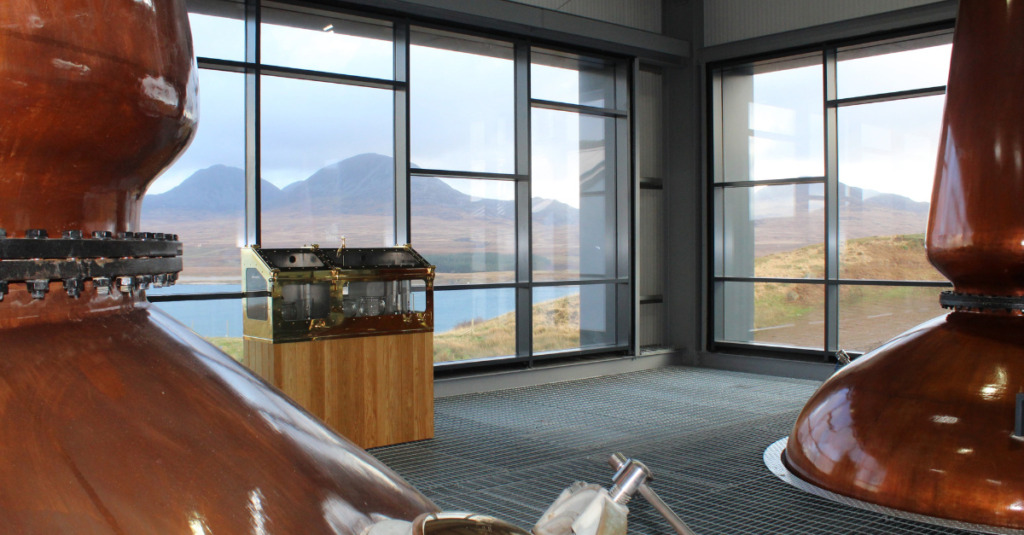
The boundary between process and construction needs active management
One of the recurring challenges on complex industrial projects is the interface between process design and conventional construction design.
The distinction may look clear in an appointment schedule or responsibility matrix. In practice, the physical interfaces are everywhere.
Equipment loads affect structural design. Process requirements influence mechanical and electrical infrastructure. Drainage strategy may depend on production information. Access for installation and future replacement can affect building geometry and sequencing. Hazardous areas, fire considerations and operational safety can shape both design and construction planning.
If those interfaces are treated as separate workstreams, gaps emerge. Each party may deliver its own scope correctly while the overall project remains exposed.
Effective Project Management and Principal Designer input should challenge these boundaries. Who owns the information? When is it required? What design decision depends on it? What happens to cost and programme if it changes?
The earlier those questions are asked, the more opportunity there is to coordinate rather than react.
Visitor experience has changed the brief
For many distillery developments, the public-facing element is no longer a secondary consideration.
Visitor centres, tasting spaces, retail areas and curated experiences can be central to the commercial and brand strategy of a project. That introduces a different set of expectations from those associated with a purely industrial facility.
The production environment may prioritise efficiency, durability and operational control. Visitor spaces are judged on atmosphere, material quality, storytelling and the way people move through the building. The two can sit side by side, but they do not automatically align.
This creates important cost and programme decisions.
Where should investment be concentrated? Which elements are essential to the visitor proposition? Which materials have long lead times? How are specialist fit-out packages coordinated with the base build? Can visitor routes be safely integrated with a live production environment?
The answer is not to treat the visitor experience as an expensive finish applied near the end. It needs to be understood as part of the brief from the outset. Otherwise, design ambition can develop without sufficient commercial challenge, or value engineering can remove the very elements that were intended to differentiate the experience.
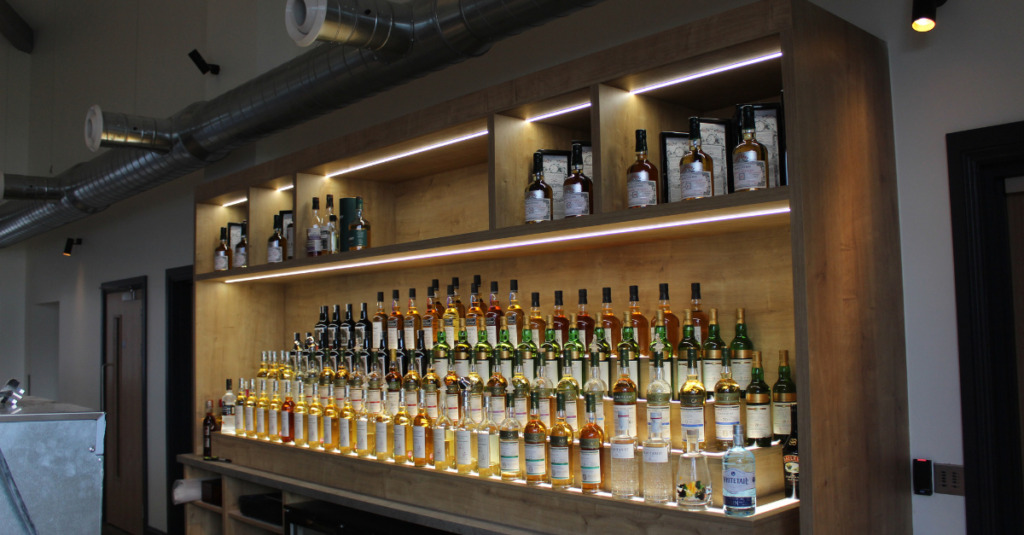
Heritage and place are commercial considerations too
Scotland’s distilling sector is closely connected to place. Rural landscapes, islands, coastal locations and historic buildings are often part of the identity of the product itself.
That context can be a major strength, but it also influences project delivery.
Historic fabric may require detailed investigation and specialist repair. Constrained sites can complicate logistics and temporary works. Remote locations may affect labour, material supply and accommodation. Planning and stakeholder considerations can influence design development. Existing buildings may contain conditions that cannot be fully understood until surveys and opening-up works are completed.
These are not simply technical complications. They are commercial risks that need to be reflected in budgets and programmes.
Building Surveying input can be particularly valuable where existing or historic assets form part of the development. Early investigation helps the team understand condition, identify areas requiring further work and avoid relying on assumptions that later prove expensive.
For the Quantity Surveyor, the challenge is to ensure cost plans reflect the maturity of that information. An early estimate based on incomplete surveys should not be presented with a level of certainty the project has not yet earned.
Sustainability is moving closer to the investment case
Energy, carbon and resource use are increasingly influencing distillery investment decisions.
The sector has already been examining alternative energy sources, heat recovery, water use and more efficient production infrastructure. As projects evolve, these considerations are becoming more closely connected to core capital planning rather than being treated as separate environmental initiatives.
That creates a more sophisticated appraisal challenge.
A lower-carbon solution may require greater capital investment but reduce long-term operational exposure. New technology may offer significant benefits while introducing programme, integration or performance risk. Existing infrastructure may constrain the options available. Grid capacity and utility requirements can affect both feasibility and timing.
Clients therefore need to understand the whole-life commercial implications of decisions, not simply the initial construction cost.
Quantity Surveying and Project Management have an important role here. Options need to be compared consistently, assumptions made visible and dependencies understood. Where a proposed solution relies on specialist technology or infrastructure, the programme and procurement consequences should be tested alongside the business case.
Sustainability ambition is most credible when it is integrated into project decision making early enough to influence the design.
Programme pressure can hide unresolved risk
Distillery projects often have commercially significant target dates. Production plans, equipment delivery, seasonal constraints, funding commitments or visitor launch strategies may all influence the programme.
The danger is that a target date becomes a substitute for a tested delivery plan.
A programme can show design, procurement, construction and commissioning in neat sequence while significant dependencies remain unresolved. Process information may still be developing. Long-lead equipment may not be fully coordinated. Statutory approvals may be based on an evolving design. Existing site conditions may require further investigation.
Compressing the visible programme does not remove those risks. It simply reduces the time available to manage them when they emerge.
A realistic programme should expose information requirements and decision dates as clearly as construction activities. It should identify the points at which client input, specialist design or equipment information is required. It should also allow appropriate time for commissioning, testing and operational readiness.
For production facilities, practical completion is not the only meaningful milestone. The asset has to work.
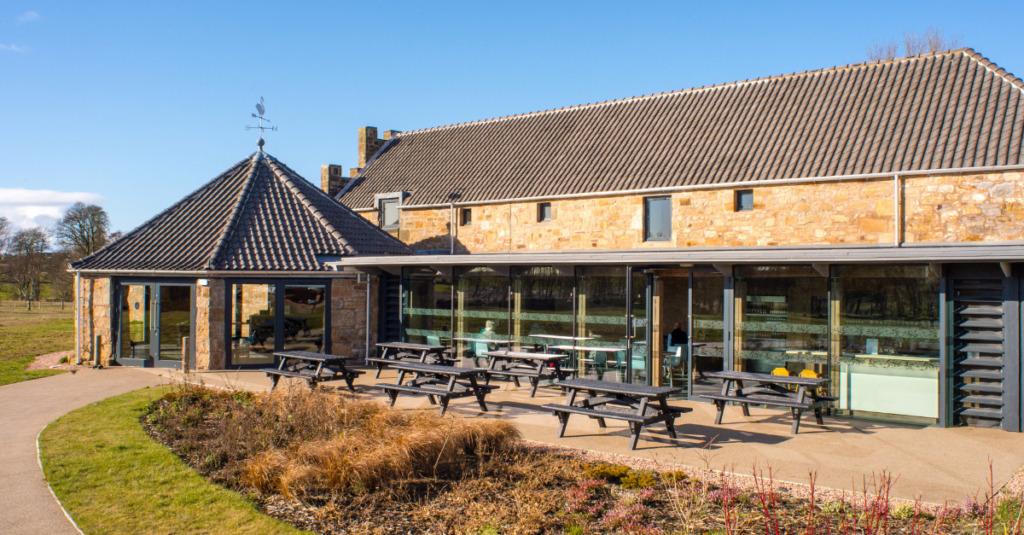
Procurement needs to reflect project maturity
There is no single procurement route that suits every distillery development.
The right approach depends on the level of design definition, specialist interfaces, client risk appetite, programme and market conditions. Problems arise when procurement decisions are driven primarily by the desire to start on site before the project is sufficiently understood.
Early contractor involvement can be valuable where buildability, logistics or specialist coordination require market input. Package strategies may help manage long-lead equipment or specialist works. Traditional or design and build approaches can each be appropriate, but the allocation of responsibility must reflect the reality of the information available.
Transferring a poorly defined risk does not make it disappear. It usually changes how it is priced.
Commercial advice should therefore challenge whether the project is genuinely ready for the chosen procurement route. Are the employer’s requirements sufficiently clear? Have process interfaces been defined? Are surveys complete enough? Does the programme allow design responsibilities to be discharged properly?
Procurement should create a delivery structure for the project the client actually has, not the project the team wishes it had.
Whole House thinking is increasingly relevant
The changing distillery brief makes integrated consultancy more important.
Quantity Surveying cannot provide reliable commercial advice without understanding programme, design maturity and technical risk. Project Management cannot protect the programme without visibility of cost decisions and specialist interfaces. Building Surveying may be essential where existing assets, historic fabric or condition risk influence the development. Principal Designer input should be embedded early enough to influence coordination and design risk rather than reviewing decisions after they have hardened.
Bringing these disciplines together creates a stronger challenge around the client.
If a design option changes, what is the cost impact? Does it alter programme or procurement? Does it create a new interface with the process design? Are there implications for existing fabric or design risk?
This Whole House approach is not about adding layers of consultancy. It is about reducing the gaps between disciplines where project risk often sits.
On a modern distillery development, those gaps can be commercially significant.
The definition of a distillery project has changed
Distillery developments will continue to be rooted in production. That is the asset’s commercial purpose and should remain central to project decision making.
But the environment around that core has become more complex.
Projects are being asked to respond to brand, visitor, sustainability, heritage and operational priorities at the same time. Specialist design interfaces are increasing. Programme expectations remain demanding. Clients need stronger evidence behind capital decisions and greater visibility of risk.
The answer is not more reporting or more process for its own sake. It is earlier coordination and clearer commercial challenge.
The projects that perform best will be those that define priorities early, expose interfaces, test assumptions and connect cost, programme, building condition and design risk throughout delivery.
Distillery projects are evolving. The consultancy approach around them needs to evolve too.
For clients considering new production capacity, redevelopment or investment in an existing distillery estate, the most valuable conversations often happen before the project is fully formed. That is the point at which options remain open and better decisions can still shape the outcome.